
Mold detection & assessment
Mold is a symptom. Water is the cause.
Anyone can scrub a wall. If the moisture is still there it comes back, same place, within weeks. So we start by finding the water.
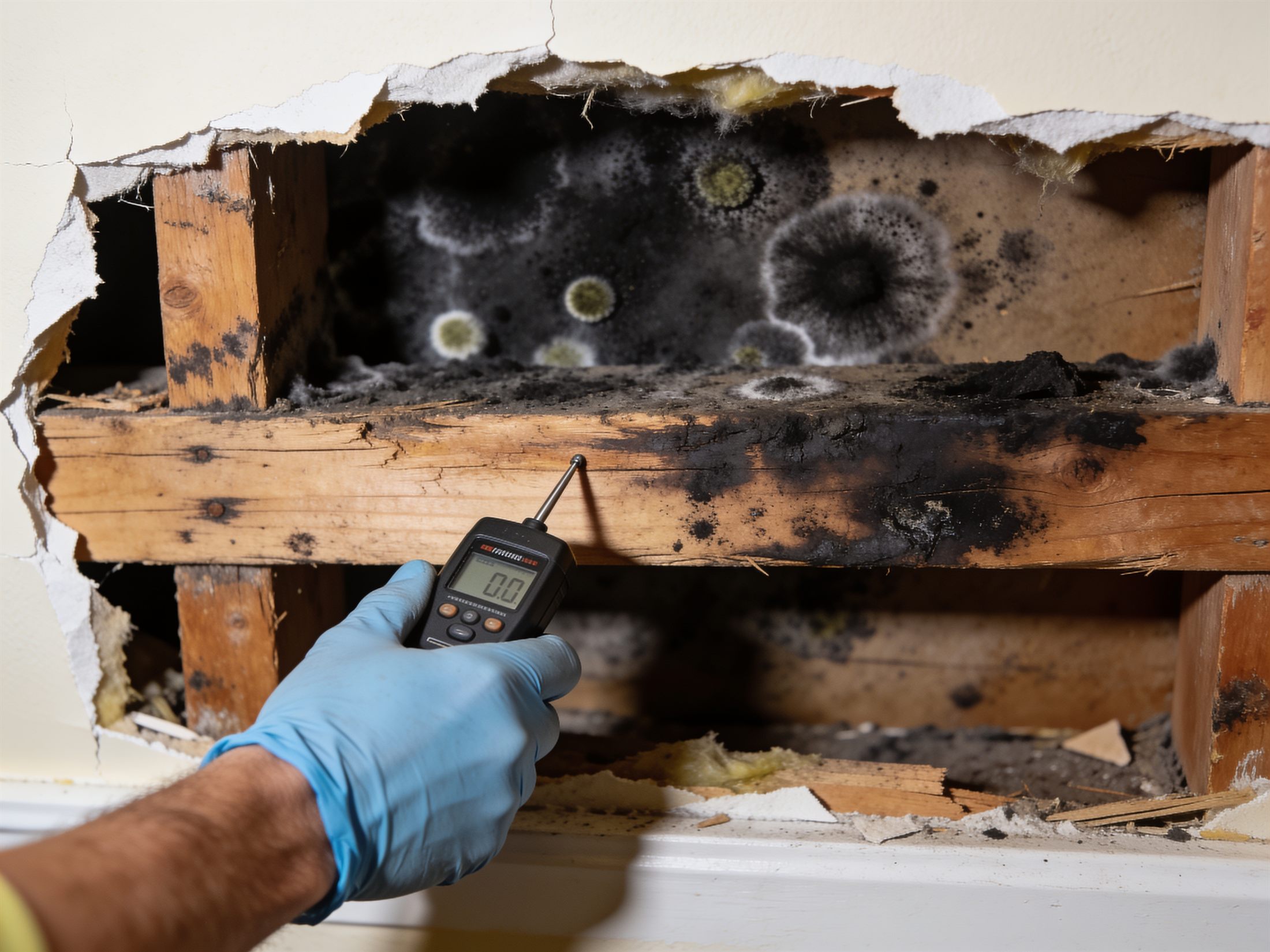
How do I know if I have mold?
Signs include musty odors, visible spots, or recent water damage. Professional testing can confirm it.
In practice, the things that bring people to us are:
- A persistent musty or earthy smell that comes back after cleaning
- Dark, fuzzy or discolored patches: often behind furniture, under sinks, near showers
- Staining that reappears in the same spot after painting over it
- Allergy or asthma symptoms that improve when you leave the house
- Any water damage from the past that was never properly dried
Scrubbing or bleaching it throws spores through the house. Do not point a fan at it. Shut the door and take a photo from a distance.
Where it hides
What you can see is usually the smallest part. The leak feeding it is inside the wall, and so is the rest of the mold.
- Wall cavities fed by a pinhole supply-line leak or a failed shower pan
- Under flooring where water wicked in and was never fully dried
- Attics with inadequate ventilation and roof condensation
- Under sinks and behind cabinets: the most common single location we find
- HVAC systems, which then distribute spores to every room
What an assessment involves
- Visual inspection. Every area you've noticed, plus the places moisture tends to collect that you haven't.
- Moisture mapping. Thermal imaging and moisture meters locate wet materials behind finishes without opening walls unnecessarily.
- Source identification. Working out where the water is actually coming from. This is the part that determines whether the fix lasts.
- Documentation. Photographs, readings and a written assessment of what was found and where.
- Scope and recommendation. What needs remediation, what needs repair, and what can be left alone.
Where laboratory confirmation is warranted, testing can be arranged. Professional testing is what turns "I think that's mold" into something an insurer or a buyer will act on.
How remediation works
We build containment around the area and put it under negative air so nothing spreads while we work. Anything porous that cannot be saved is bagged inside the containment. Surfaces are vacuumed and treated, and the area is checked clear before the containment comes down.
Then the moisture source gets repaired: because without that, everything above is temporary.
Your insurance
Mold is the most restricted line in most policies. It is usually covered only when it came from a sudden loss you reported quickly, and often capped low. Long-term leaks are excluded.
So proving where it came from matters more here than anywhere. We record what caused it and when. More on how claims work →
Common questions
Mold FAQ
How do I know if I have mold?
Can't I just use bleach?
Is it dangerous?
Will my insurance cover it?
Do I need testing?
Find the water. Then fix the mold.
A free assessment tells you what you're actually dealing with, and whether you need us at all.