
Stop the source
Shut off the water, or wait for the fire department to clear the structure. Safety before property.
Insurance claim support
We can document the damage, provide estimates, and communicate with your adjuster. You have enough going on without also becoming an expert in claim documentation.
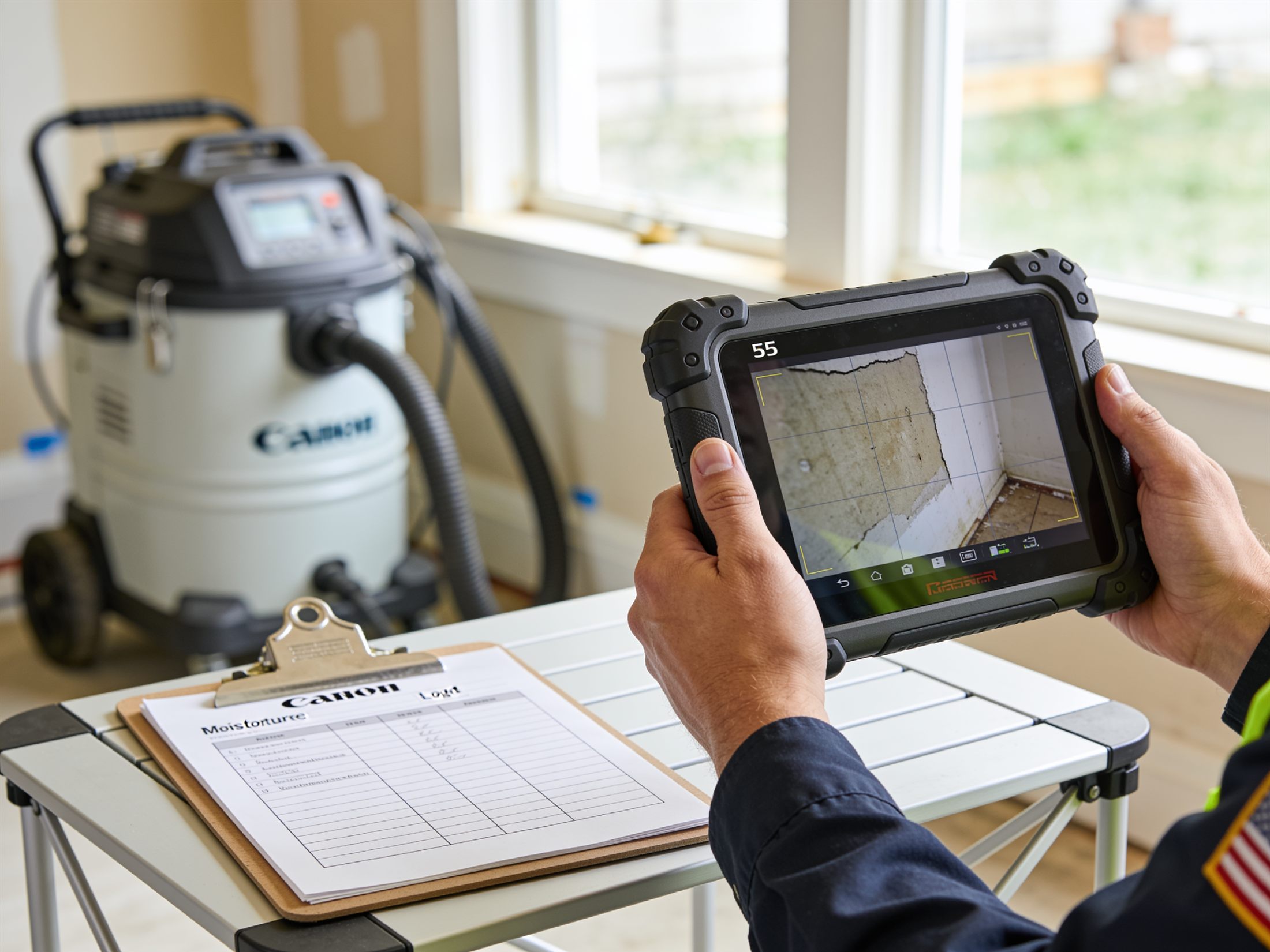
The first hour
Most claims get reduced for one reason: the damage was disturbed before anyone documented it. This is the order that protects you.
Shut off the water, or wait for the fire department to clear the structure. Safety before property.
Call us first, not your insurer. We document the loss the way an adjuster needs to see it and start mitigating, so the claim you file already has its evidence attached. A slow start is its own reason for a reduced payout.
Before you move a single item. Wide shots of each room, then close-ups. Timestamps matter.
Damaged contents are evidence. Your adjuster may need to see them before they go.
Adjusters work from evidence. Organized evidence means less friction now and no argument about scope six weeks later.
Almost every policy requires you to stop the damage getting worse. Waiting days for an adjuster before anything starts can reduce your settlement. Starting promptly protects the claim.
Most policies cover sudden damage like a burst pipe, but not a slow leak. That one distinction is why most water claims get cut.
Covered on virtually every homeowner policy, including the water damage caused by firefighting, and usually including additional living expense while the home is uninhabitable.
The most restricted line in most policies. Often covered only when it results directly from a covered sudden loss, and frequently capped at a low limit.
Usually a separate endorsement rather than base coverage. Worth checking your declarations page for "water backup": many people find they have it and didn't know.
Water rising from outside the building is generally not covered by a homeowner policy and requires separate flood insurance.
On that last one: in most cases you can choose your own restoration contractor. Carriers frequently suggest a preferred vendor, and you're generally free to use someone else.
We are a restoration contractor, not a public adjuster or an attorney, and none of this is legal advice. We document what we find. Coverage decisions belong to your carrier.
Common questions
You deal with your family. We'll deal with the moisture logs, the photographs and the adjuster.