
Emergency Board-Up & Tarping
An open building keeps taking damage.
After a fire, a storm or a break-in, the loss does not stop when the event does. Until the envelope is closed, rain, animals and anyone walking past are all still adding to your claim.
- Response
- Same day, any hour
- Covers
- Windows, doors, roof
- Also
- Photographed for the claim
- Then
- Mitigation starts
Why it happens first
Most policies require you to take reasonable steps to prevent further damage. An unsecured building after a loss is the clearest possible example of not doing that, and carriers reduce settlements over it.
Board-up is usually the cheapest line on the whole claim and the one that protects every other line.
What we secure
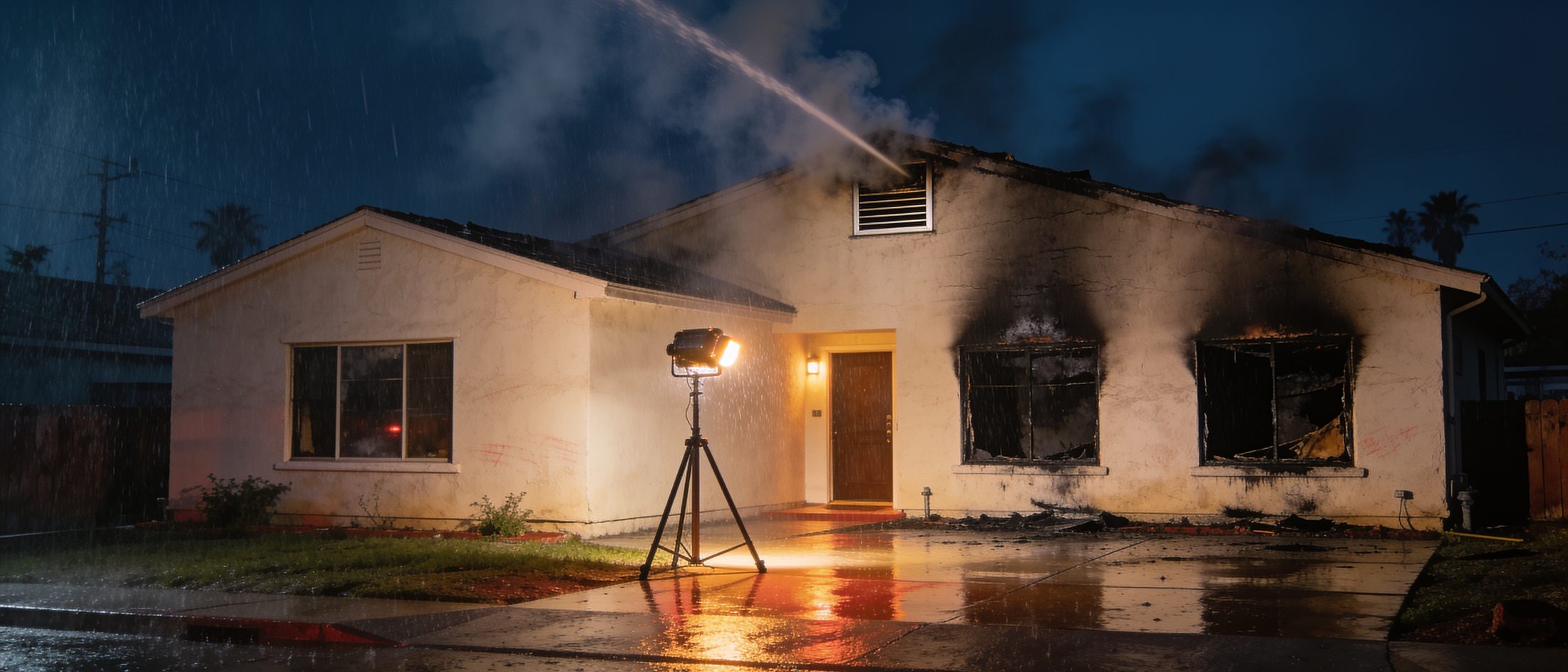
Broken and burnt-out windows, doors that no longer close or lock, holes in exterior walls, and roof sections opened by wind, fire or the fire department getting in.
Roof tarping is fastened, not weighted, so it holds through the next storm rather than the next breeze.
Documented while we do it
Every opening is photographed before it is covered. That record is what proves the state of the building at the point we arrived, which matters when the adjuster turns up a week later and the tarps are all they can see.
Your insurance
Emergency board-up and tarping is covered under the mitigation portion of almost every claim, and it does not usually need approval before it happens. We bill your carrier direct. More on how claims work →
Straight answers
Emergency Board-Up & Tarping FAQ
How fast can you board up?
Do I need approval from my insurer first?
How long can the boards stay up?
An open building is an open claim.
Board-up is the cheapest thing on the job and it protects everything else.